

We are one more week into poetry month. I hope you have been having some fun writing and reading poems this month. I certainly have been! The Haiku poem is a popular poetry format that is short, creates a picture in the reader’s mind, and is usually read in one breath. It has been part of Japanese literature since the 9th century. It has a specific structure of three lines; the first and third lines have five syllables and the second line has seven syllables. The poems’ lines do not usually rhyme. There are no rigid rules about capitalization or punctuation. Traditionally the Haiku’s subject is nature; a small window of time that sites details that show the why emotion is evoked rather than the emotion itself. The modern interpretation of Haiku does not have to be about nature, and there can be more freedom in the number of syllables per line, but it still tries to create a significant picture that illuminates the moment.
Here are some examples I have written:
Springtime Mating
Little brown lizard
An orange dewlap bulges
Enticing the girls.
Here is an example of a riddle Haiku. I have written a description of something, and the reader is asked to guess what that something is. Children love this game.
What am I?
Walking atop bushes
Eying my dinner for one
My orange beak snaps
[Can you guess? (Egret!)]
The process of writing a Haiku can be rewarding. Once you have chosen a subject, think about words that describe that moment in time. Be descriptive and explore the emotions that surround that moment. Consider that the last line usually observes the relationship between the first two lines and the last. Can you find something that is unexpected?
I would love to see your efforts in writing a Haiku poem. Comments are welcome – see below.
 limericks? Today I am going to discuss another type of poem called the Acrostic Style Poem. I’m sure you have seen such poems – this is when the first, middle or last letter of the lines spell out a word or phrase vertically. The most often used format is the first letter of the lines vertically spells out the word or phrase. The M is for Mother poem is an acrostic poem.


 had a secretary that was more than willing to type up letters for me. Ah, but then the advent of the computer era came along. Sigh. My pecking along with one finger was not cutting it. So did I take a typing class? Did I seek out a YouTube course on typing? Of course not, instead I developed a funky two-handed method that I continue to use until today. I have to look at the keyboard to have any speed at all and often, and I mean often, I have to read each line and edit several words that I have goofed up with my homegrown method of typing. It’s embarrassing how much time I spend re-typing and correcting what I write.
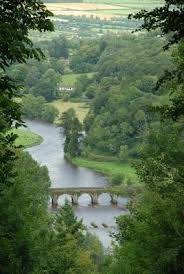 When I think of St. Patrick’s Day, I immediately think of green. Ireland, the home of St. Patrick, is often called the Emerald Isle because of the many shades of green that dot the countryside. Of course, the most famous green plant coming from Ireland is the Shamrock, a three-leafed clover which comes in a variety of shades of green. Interestingly, the human eye can detect more shades of green than any other color. That is, perhaps, why green is second only to blue as the most favorite of colors.
 Chasing The Tale