

A writer’s life is mostly solitary. As an author, you are alone with your thoughts and a computer or paper. It can be lonely. The whole experience can drive you a bit batty. However, I have found that if I have a companion animal in the room, the experience is not quite as lonely. You have someone to ‘talk’ to, even if they don’t have the foggiest idea as to what you are saying. They listen anyway. They also give you an excuse to get up and feed them, or let them out, or just play a little. They bring you great comfort just by being near.
Not that long ago – April of last year, I lost my older Poodle/Bishon Frise mix dog, Barbet. And I am sorry to say last Thursday I had to put down my dear Baby Belle, Barbet’s younger sibling. She had stopped eating and was suffering from canine dementia. As much as I didn’t want to face it – it was time. Thankfully, she passed gently and without suffering.
Belle was by far the sweetest of all the dogs I have had. She may not have been the smartest – I sometimes called her Ding-Dong (Yes, that’s a pun) as she acted clueless at times, but she sure did make me laugh when she raised her ears up and looked like the Flying Nun. She didn’t always like to cuddle, but when she did, she wouldn’t be moved for what seemed like hours. I had other nicknames for her also, like ‘Jelly Belly’ and ‘Ma Bell,’ but mostly I called her Baby Belle as she was my littlest dog.
I now have no animal in my house, and it seems quite empty. I’m not sure how long I can go without a companion to help me get through the loneliness when I am working – and for that matter the whole day and night. You will be missed dear Baby Belle. Rest in Peace.

Belle 2003 – 2019

 thoughts or feelings to inanimate objects or abstract ideas. For example, when we say, “The clouds weep,” we are giving the clouds the ability to cry, which is a human quality. If we say, “Justice is blind.” We are giving an abstract idea a human attribute. The purpose of giving human characteristics to animals or objects is to create imagery. When a writer uses this type of writing, it gives the reader a more complete or deeper understanding of that which is trying to be conveyed. Personification is mainly used in a single sentence to set the stage about the object or animal. The goal of personification is to give human characteristics to animals or objects to create imagery.
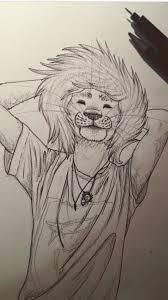 The last term Zoomorphism refers to a literary device in which the writer ascribes animal characteristics to humans, gods, or other objects. Again this is used to create imagery to describe the character better. Zoomorphism can also include giving one animal the characteristics of another animal, such as a dog heard to “moo.” A special class of zoomorphism in which a human can shape-shift into an animal is called therianthropy – think of the character Sirius, in J K Rowling’s Harry Potter series, changing from a human into a dog. Zoomorphism provides the reader with insight as to what animal that character resembles or the animal-like personality of that character.
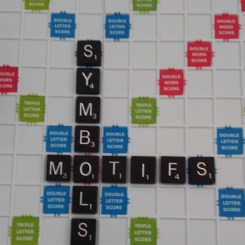 usually an object that stands for a concept. The dictionary definition is “a thing that represents or stands for something else, especially a material object representing something abstract.” Take, for instance, a picture of a heart can mean love or the color green can represent ‘go,’ or growth, or even the country Ireland. Symbols are something concrete that reminds us of something else. Symbols may only occur once in a story, or they may be reoccurring. In that case, they are contributing to the motif.
 In my book,
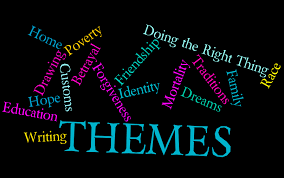 In writing any piece, such as a story or novel, an author writes about something. Usually, this is intentional, but at times, we write, finish, and then discover what we have written. The something that we have written about is called the Theme. Other ways to define theme include the essence, the main topic, or the central idea of the piece. The theme summaries what the story means and how it relates to the reality of life. The theme can be rather simple like ‘friendship,’ ‘family,’ or ‘companionship.’ Or the theme can be more complex such as ‘coming of age,’ or ‘love overcoming hate.’
 the theme they want to reveal to the readers. However, this may lead to reader being hit over the head with the theme and thus can become preachy and heavy-handed. Some authors write with no particular theme in mind. Instead, they wait until the draft is done and then exam the story for a theme. They can them strengthen the theme or change it. The third way authors write is to completely ignore the idea of a theme and allow the readers to come up with their own conclusion about the story. In some instances of this type of writing, the story is not unified, and the reader comes away unsatisfied or with a skewed impression of the story.
 As you are thinking about the plot, ask yourself: What is the essence of the story which relates to life? What life lesson(s) will your main character learn throughout the story?
 Chasing The Tale